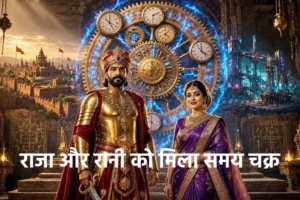
The Raja Rani Temple Story tells the tale of a wise king and a compassionate queen who build a unique temple where people discover that true devotion lies in good deeds, humility, and self-reflection rather than wealth.
The Beginning Of Raja Rani Temple Story
The Raja Rani Temple Story begins in the prosperous kingdom of Suryagarh. King Virendra was known for his fairness, while Queen Devyani was admired for her wisdom and kindness. Together, they believed that a kingdom’s greatest strength was not its palaces but the values of its people.
One day, an old sage visited the royal court.
He advised the king,
“If you wish your kingdom to prosper for generations, build a temple where every person is welcome without discrimination.”
The king accepted the advice and ordered the construction of a magnificent temple on a hilltop.
Months later, the temple was completed using beautiful white stone.
However, instead of placing an idol inside the sanctum, the king installed a large polished mirror.
When people asked why there was no statue, the king smiled.
“The mirror reminds everyone that God first lives within our actions and character.”
Years later, a greedy neighboring king tried to loot the temple, believing it contained hidden treasures.
When he entered the sanctuary, he found only the mirror.
In anger, he raised his sword.
But instead of breaking, the mirror reflected his own greed, pride, and cruelty.
Shocked by what he saw, he lowered his weapon.
The temple priest calmly said,
“This mirror reveals the heart, not merely the face.”
The next morning, the king apologized to King Virendra.
King Virendra forgave him and said,
“The moment a person accepts their mistakes is the moment they begin a better life.”
Queen Devyani later transformed the temple into more than a place of worship.
She established a school, a free medical center, and a community kitchen beside it.
The temple soon became a symbol of compassion, education, unity, and service.
Even today, legends say that whoever stands before the magical mirror with a sincere heart discovers both their greatest weakness and their greatest strength.
Moral of the Story
- True temples are built through good deeds.
- Greed and pride destroy wisdom.
- Accepting mistakes is the beginning of greatness.
- Compassion and service create a lasting legacy.
Read Story in Hindi राजा रानी मंदिर की कहानी
FAQs – Raja Rani Temple Story
What is the Raja Rani Temple Story about?
The Raja Rani Temple Story is an inspiring folktale about a wise king, a compassionate queen, and a magical temple that teaches the importance of honesty, humility, kindness, and self-reflection.
What is the moral of the Raja Rani Temple Story?
The story teaches that true greatness comes from good deeds, compassion, and humility rather than wealth or power. It reminds readers that real devotion begins with a pure heart.
Is the Raja Rani Temple Story suitable for children?
Yes. The Raja Rani Temple Story is family-friendly and suitable for children, students, and adults. It encourages positive values through an engaging and easy-to-understand narrative.
Is the Raja Rani Temple Story based on real history?
No. This is a fictional folktale inspired by traditional Indian storytelling. It is written for entertainment and moral education.
Why is the temple important in the Raja Rani Temple Story?
The temple symbolizes wisdom, service, and self-discovery. Instead of representing material wealth, it encourages people to reflect on their actions and become better individuals.
Who should read the Raja Rani Temple Story?
Anyone who enjoys inspirational stories, Indian folklore, moral tales, bedtime stories, or educational stories for children and families will enjoy the Raja Rani Temple Story.
Can I share the Raja Rani Temple Story on my website?
Yes, if you are using your own original version of the story. The version created specifically for your website is unique and suitable for publishing.
यह कहानी आपको कैसी लगी?