लोहा खाने वाले चूहे – पंचतंत्र की कहानी (हिंदी में)
बहुत समय पहले, एक व्यापारी अपना घर छोड़कर दूसरे नगर व्यापार करने गया। जाने से पहले उसने अपने मित्र के पास एक बड़ी लोहे की तराजू (धन मापने का यंत्र) सुरक्षित रख दी और कहा,
“मित्र, इसे संभालकर रखना, मैं लौटकर ले जाऊँगा।”
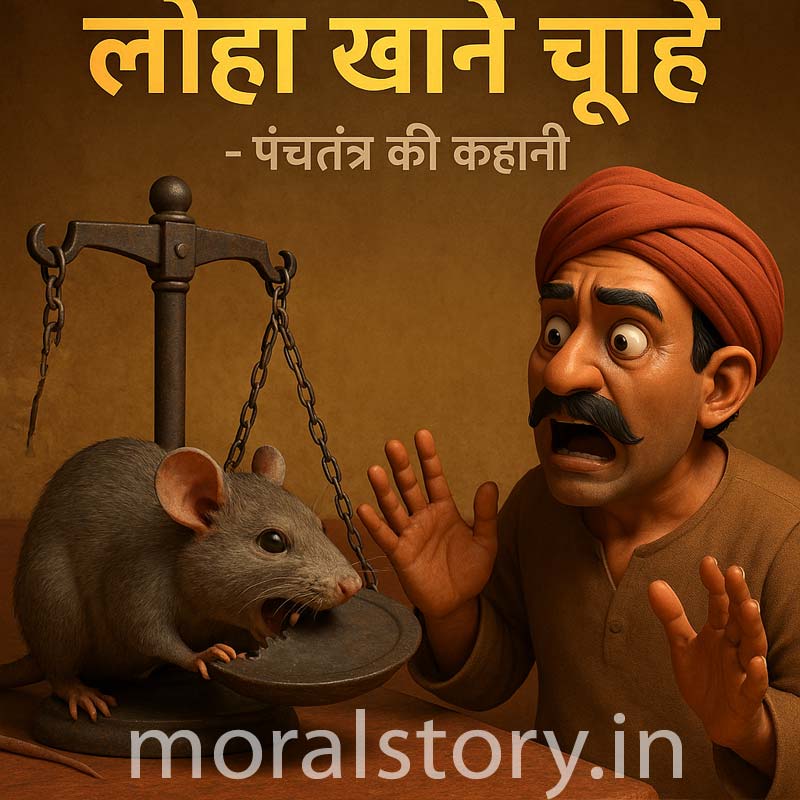
मित्र ने लोहे की तराजू देखी और मन में लालच आ गया। उसने तराजू बेच डाली और सोचने लगा, जब वह लौटेगा, तो कह दूँगा कि चूहों ने खा ली।
कई साल बाद व्यापारी लौटा और तराजू माँगी। मित्र ने उदास चेहरा बनाकर कहा,
“मित्र, मुझे बहुत अफसोस है, लेकिन चूहों ने तुम्हारी लोहे की तराजू खा ली।”
व्यापारी ने समझ लिया कि मित्र धोखेबाज़ है, लेकिन उसने कुछ नहीं कहा और सोचा कि इसे सबक सिखाना होगा।
व्यापारी की योजना
अगले दिन व्यापारी ने मित्र के बेटे को बहाने से नदी घूमने के लिए बुलाया और उसे अपने घर ले गया। वहाँ उसे सुरक्षित रख दिया।
शाम को मित्र अपने बेटे को खोजते-खोजते व्यापारी के पास पहुँचा और पूछा,
“मेरा बेटा कहाँ है?”
व्यापारी ने गंभीरता से कहा,
“मित्र, मुझे अफसोस है, लेकिन जब हम नदी किनारे थे, तब एक बड़ा बाज आकर तुम्हारे बेटे को उठा ले गया।”
मित्र क्रोधित हो उठा,
“क्या कभी बाज इंसान का बच्चा उठा सकता है?”
व्यापारी मुस्कुराया और बोला,
“जब चूहे लोहे की तराजू खा सकते हैं, तो बाज बच्चा क्यों नहीं ले जा सकता?”
⚖️ न्याय
दोनों में विवाद होने पर वे राजा के दरबार पहुँचे। व्यापारी ने पूरी बात सुनाई।
राजा ने मित्र को आदेश दिया कि वह व्यापारी की लोहे की तराजू लौटा दे और व्यापारी ने भी उसका बेटा वापस कर दिया।
कहानी से सीख (Moral of the Story):
- झूठ और धोखा अंत में पकड़ा ही जाता है।
- चतुराई से अन्याय का जवाब देना चाहिए।
- ईमानदारी सबसे बड़ी पूँजी है।
🔗 और पंचतंत्र की कहानियाँ पढ़ें:
- 👉 बाघ, ब्राह्मण और सियार – पंचतंत्र कहानी
- 👉 हाथी और चूहे – पंचतंत्र कहानी
- 👉 बिल्ली का निर्णय – पंचतंत्र कहानी
लोहा खाने वाले चूहे कहानी, पंचतंत्र कहानियाँ, नैतिक कहानी हिंदी में, moral story in Hindi, Hindi motivational story, Panchatantra tales, चतुराई की कहानी, moralstory.in
अक्सर पूछे जाने वाले प्रश्न (FAQs) rong>
Q1. “लोहा खाने वाले चूहे” कहानी से क्या शिक्षा मिलती है?
उत्तर: यह कहानी सिखाती है कि अन्याय का जवाब बुद्धिमानी और चतुराई से देना चाहिए।
Q2. क्या यह कहानी बच्चों के लिए उपयुक्त है?
उत्तर: हाँ, यह बच्चों को ईमानदारी और तर्कशक्ति का महत्व सिखाती है।
Q3. यह कहानी किस ग्रंथ से ली गई है?
उत्तर: यह पंचतंत्र की प्रसिद्ध चतुराई भरी कहानियों में से एक है।
The Mice Who Ate Iron – Panchatantra Story (English)
Long ago, a merchant was leaving his hometown for trade. Before leaving, he entrusted a large iron weighing scale to his friend for safekeeping and said,
“Please keep it safe until I return.”
The friend saw the iron scale and felt greedy. He sold it and decided that when the merchant returned, he would simply say that mice had eaten it.
Years later, the merchant returned and asked for his scale. The friend made a sad face and said,
“My friend, I am sorry, but the mice have eaten your iron scale.”
The merchant understood the trick but remained calm, deciding to teach his friend a lesson.
The Merchant’s Plan
The next day, the merchant invited his friend’s son to see the river and took him to his home instead, keeping him safe there.
In the evening, the friend came searching and asked,
“Where is my son?”
The merchant said seriously,
“My friend, I am sorry, but while we were at the river, a big hawk came and carried him away.”
The friend shouted in anger,
“How can a hawk carry away a human child?”
The merchant smiled and replied,
“When mice can eat an iron scale, why can’t a hawk carry away a boy?”
⚖️ Justice
The matter went to the king’s court. The merchant told the entire truth.
The king ordered the friend to return the merchant’s iron scale, and in return, the merchant gave back the boy.
Moral of the Story:
- Lies and dishonesty are always exposed in the end.
- Use wisdom and wit to counter injustice.
- Honesty is the greatest wealth.
🔗 More Panchatantra Stories:
- 👉 The Tiger, the Brahmin, and the Jackal – Panchatantra Story
- 👉 The Elephants and the Mice – Panchatantra Story
- 👉 The Cat’s Judgment – Panchatantra Story
Frequently Asked Questions (FAQs)
Q1. What is the moral of The Mice Who Ate Iron story?
Answer: It teaches that injustice should be answered with intelligence and wit.
Q2. Is this story suitable for children?
Answer: Yes, it teaches kids the value of honesty and logical thinking.
Q3. Where is this story from?
Answer: It is from the famous Indian fables collection called Panchatantra.
यह कहानी आपको कैसी लगी?